
Ringless Voicemail can support customer and member communication when teams need timely notifications, reminders, announcements, alerts, and follow-up. The strongest campaigns depend on audience segmentation, message timing, communication consistency, and a clear next step.
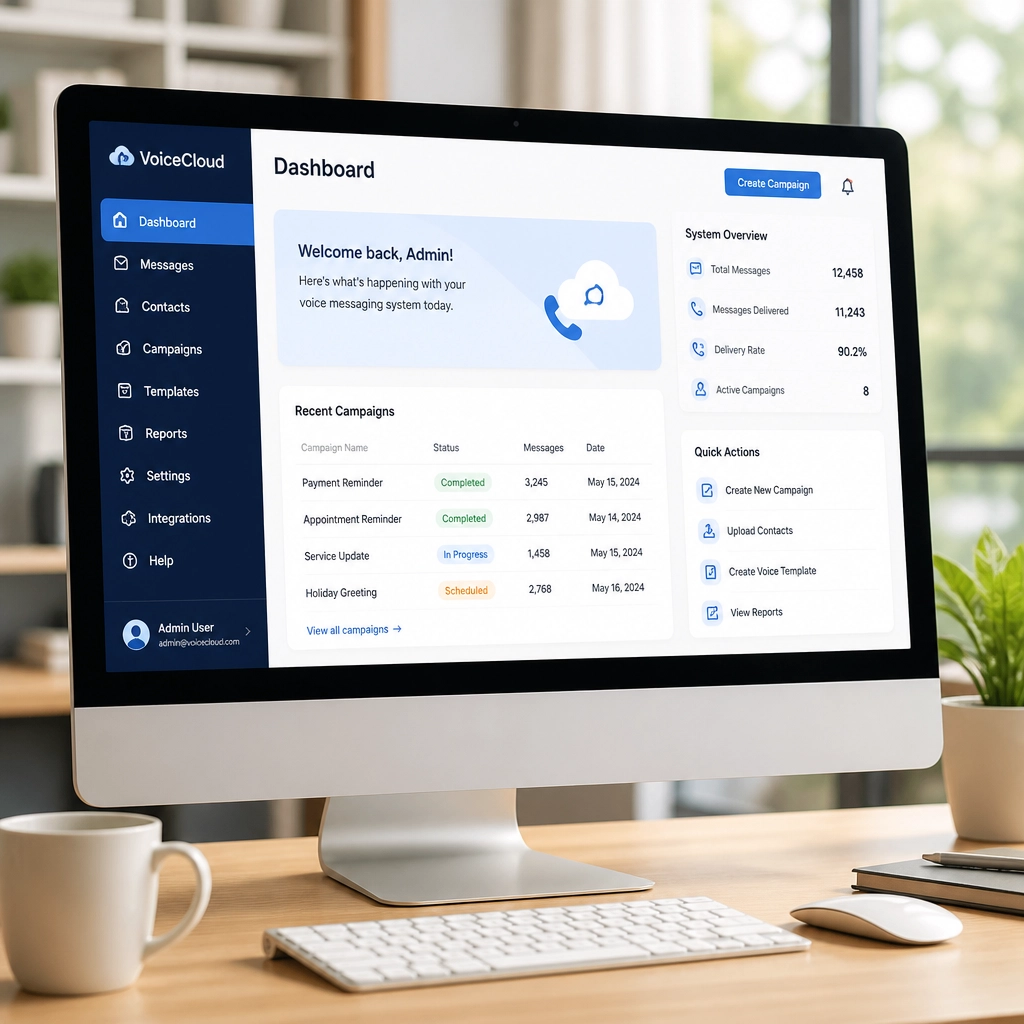
Defining Awareness Campaign Objectives with Ringless Voicemail
When setting objectives for awareness campaigns using ringless voicemail, operational clarity begins with specifying the desired recipient action and measurable outcomes. Unlike traditional outbound calls, ringless voicemail delivers pre-recorded messages directly to voicemail without ringing, enabling non-intrusive engagement.
This means objectives should focus on raising recognition or prompting a specific next step without expecting immediate live interaction. For example, a mortgage professional might define the objective as increasing appointment confirmations by 20% through reminders delivered within a defined window.
Leveraging InterCloud9’s built-in CRM allows managers to track interaction history and segment contacts based on prior engagement, ensuring that the voicemail content aligns with the recipient’s current stage. Additionally, objectives should incorporate the platform’s pay-per-delivery model, focusing on successful message drops rather than attempts, which helps refine campaign ROI calculations and resource allocation.
Designing Effective Customer and Member Notification Workflows
Effective notification workflows using ringless voicemail start with clean, segmented contact lists uploaded into InterCloud9’s built-in CRM or directly imported from existing databases. The CRM’s automatic Do Not Call (DNC) scrub feature is critical to maintaining compliance and avoiding wasted deliveries.
Once the target audience is defined, managers should record or upload personalized audio messages, using dynamic text-to-speech to insert recipient names or custom data fields. Which increases perceived relevance and listen rates.
Scheduling delivery at times when recipients are most likely to check voicemail—often outside traditional business hours—can be managed through InterCloud9’s flexible scheduling tools, ensuring messages arrive at optimal engagement windows.
Workflows should also define clear next steps within the message, such as prompting recipients to call back or visit a website and integrate disposition tracking within the CRM to monitor responses and plan follow-ups accordingly.
Optimizing Message Timing and Frequency for Maximum Engagement
Maximizing engagement in ringless voicemail awareness campaigns hinges on precise timing and controlled frequency. InterCloud9’s scheduling features allow campaigns to deliver messages during recipient-specific optimal windows, such as early evenings or weekends, when voicemail is more likely to be reviewed.
Operationally, managers should avoid sending multiple messages in rapid succession to the same contact. A best practice is to space messages by at least 3 to 5 days to prevent audience fatigue.
Since ringless voicemail bypasses ringing, recipients are less likely to perceive the outreach as intrusive, supporting a slightly higher frequency than traditional calls, but this must be balanced with opt-out rates tracked via the integrated CRM.
Monitoring listen rates—up to 96% with InterCloud9’s platform—provides a concrete metric to validate timing choices, enabling iterative adjustment of delivery windows and cadence based on actual recipient behavior rather than assumptions.
Best Practices for Compliance and Audience Segmentation
Responsible ringless voicemail campaigns rely on rigorous list hygiene and segmentation to maintain compliance and maximize relevance. InterCloud9’s platform enforces automatic DNC scrubbing before message delivery, ensuring contacts who have opted out or are on regulatory lists are excluded.
Operationally, campaign managers should segment audiences by consent status, prior engagement, and communication preferences stored within the built-in CRM. This allows for tailoring message content and delivery schedules to subgroups, such as separating appointment reminders from informational alerts.
Transparency in messaging—clearly identifying the sender and providing opt-out instructions—is essential to uphold trust and reduce complaints. Furthermore, maintaining detailed interaction records within the CRM supports audit readiness and continuous compliance monitoring, which is critical given the nuanced regulatory environment surrounding ringless voicemail.
Measuring the Success of Ringless Voicemail Awareness Campaigns
Measuring awareness campaign success with ringless voicemail requires operational metrics tied to actual recipient engagement and downstream actions. InterCloud9’s integrated CRM tracks message delivery status, enabling managers to pay only for successfully delivered voicemails, which refines cost-per-engagement calculations.
The platform’s disposition tracking captures callbacks, opt-outs, and follow-up completions, providing concrete indicators of campaign effectiveness beyond simple delivery counts. Given the non-intrusive nature of ringless voicemail, listen rates—verified up to 96%—serve as a key performance indicator, reflecting how many recipients actually accessed the message content.
Combining these metrics with CRM data on subsequent appointments, payments, or website visits allows teams to correlate ringless voicemail outreach with tangible business outcomes, helping continuous improvement of message content, timing and segmentation strategies.
Final Thoughts
Ringless voicemail campaigns can help businesses stay visible with prospects and customers while reducing the pressure of repeated live call attempts. Clear messages, accurate contact lists, and timely follow-up help make voicemail outreach more useful and measurable.